Wardogs in the rain rewards positioning over sniping as the better way to play the new season
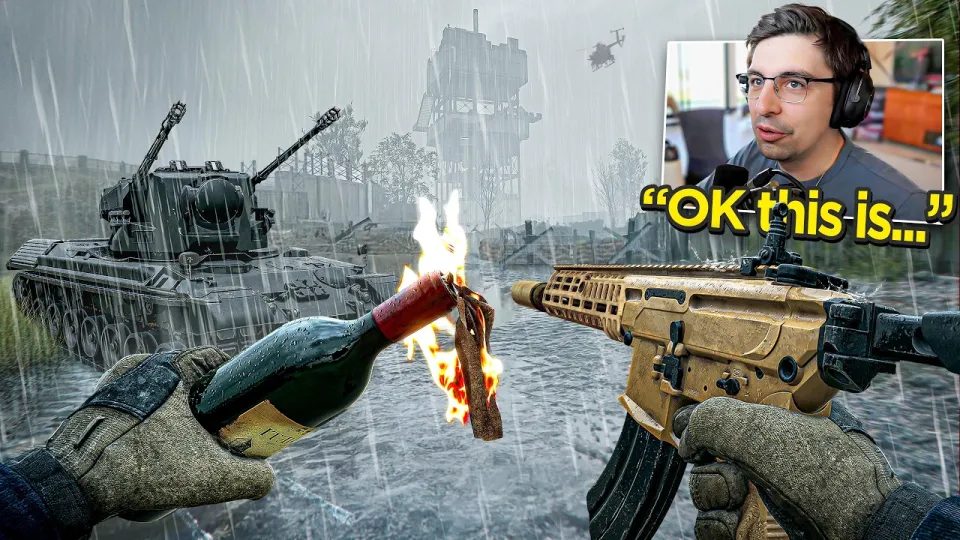
Video: Wardogs Is a Completely Different Game Now...
You can order the same kind of articles for your own video to boost it on YouTube and Google. Just message the Telegram bot @sat_sit_bot. The bot writes and publishes the articles itself (with your YouTube video embedded) on popular topical websites (no ads). Try it free: 50 articles on us.
· based on the channel shroud
Key takeaways
- Season 2 of Wardogs adds heavy rain as a full weather condition, not a cosmetic effect.
- Rain cuts visibility to roughly 190 meters in places, gutting long-range sniping on maps like Ozeti.
- Infrared goggles gain value in rain because thermal contrast survives low visibility.
- HP ammo aimed at legs is the counter to armored targets, yet players keep shooting torso and head.
- Squad comms beat numbers: a coordinated six-player group can outfight a scattered 20-player lobby.
Wardogs in the rain is better played as a positioning and close-quarters game than as a sniper's game, because Season 2's heavy weather cuts sightlines to around 190 meters and turns long-range duels into guesswork. The rain is the single biggest change to how fights start, where they happen and which gear pays off, and the shroud stream on Spotify is a good place to hear the crew work through it live.
What the rain actually changes in Wardogs Season 2
Rain in Wardogs Season 2 is a real gameplay condition rather than a visual filter, and it rewrites the value of every engagement distance. Players fighting around Ozeti describe constant raids and pushes toward the bridge where the storm makes the map feel unfamiliar, and the practical result is that mid- and long-range optics lose most of their purpose. If you can barely resolve a silhouette past roughly 190 meters, a scoped rifle becomes a liability you carry into a fight that will probably close to 50 meters anyway.
The knock-on effects stack up quickly:
- Rotations get shorter and louder, because squads move between buildings instead of holding open ground.
- Sound matters more than sight, so footsteps, doors and reloads become your primary intel.
- Anything that improves contrast at distance — thermal and infrared optics above all — jumps in tier.
- Shotguns, SMGs and anything with a fast TTK inside a room gain relative value.
- Helicopter travel turns into a genuine risk-reward decision, with rain on the windshield cutting pilot visibility.
Why sniping stops being the better option
The core argument for dropping the sniper role in rain is simple: a weapon only wins fights it can actually see. Wardogs already pushes players into compounds, towers and bridges, and the storm removes the one advantage a marksman had — clean lines of sight across open terrain. A player holding a ridge in clear weather controls a road; in rain that same player controls nothing, because targets vanish into grey before the reticle settles.
That does not make rifles useless. It makes them situational, and the situations are narrow: overwatch on a chokepoint you already know is occupied, or finishing a target your squad has marked and pinned. The rest of the time, a compact weapon with HP ammo does more work per minute. If you insist on keeping a long gun, pair it with infrared goggles and treat it as a support tool rather than your primary plan.
HP ammo and the leg-shot problem
Armor in Wardogs makes body shots expensive, and HP ammo is the answer the game hands you — provided you aim where armor is not. The recurring failure in the stream is a player being told to shoot legs, acknowledging it, then emptying a magazine into torso and head and blaming the weapon. The gun is not bad; the aim is.
A workable routine for armored targets:
- Confirm you are loaded with HP ammo before the fight, not during it.
- Aim at the legs and thighs, where protection is thinnest.
- Hold the burst low through the whole magazine instead of drifting up to the chest.
- Repack magazines behind cover, never in the open and never mid-descent from a ladder.
- If you are caught with the wrong ammo, break contact instead of trading.
The PP-19 with HP rounds is the clearest example from the session: once the ammo question was settled, the same weapon that was declared the worst in the game cleared a room. Weapon choice matters far less than ammunition and placement.
Squad comms against a bigger lobby
Numbers in Wardogs are less decisive than coordination, and the rain amplifies that gap. A 20-player lobby is not a 20-player army; it is a crowd of separate groups with separate comms, and most of them will be fighting the weather as much as each other. Six players in one voice channel, calling targets and sharing rotations, consistently outperform a larger but fragmented opposition.
What that looks like in practice: one player calls the building, another covers the exit, a third holds the ladder or the stairwell, and nobody opens their inventory in the middle of a push. The stream shows the opposite too — a player gets shot from a building, announces the enemy is inside, drops in, stops to repack ammo, and dies to the same opponent. Game sense under pressure is the skill the rain tests hardest, because you get less warning and fewer chances to correct a bad decision.
Reading the weather as a tactical layer
The rain is not only a penalty; it is a filter that changes who is comfortable on the map. Players who learn the storm routes — the towers, the interiors, the short bridge crossings — get fights on their terms, while players who keep playing the clear-weather game keep dying to enemies they never saw. The crew's own reaction after pushing out of the south tower at Ozeti and looking at the bridge was recognition: this is the same map, but a different part of it.
Treat weather as a loadout decision. Rain forecast means infrared goggles, a close-range primary, spare HP ammo and a route that never crosses open ground for more than a few seconds. Clear weather means the opposite, and the players who swap before the first contact are the ones who set the pace of the match.
Common questions from players watching the run
Three doubts come up again and again in the comments, and each has a practical answer. First, does the rain make the game worse for skilled players? It removes one skill — long-range precision — and replaces it with three others: route selection, sound reading and close-quarters recoil control. Second, is the PP-19 actually weak? No; it is weak only when loaded wrong and aimed at armor. Third, does a bigger lobby mean a harder match? Rarely, if the larger side is not communicating, which is the normal case.
The other recurring theme is recoil envy. Watching a high-level player hold a spray does not mean your settings are broken; it means pattern familiarity takes repetition. Pick two weapons, learn their recoil in the rain where fights are short, and stop switching loadouts every match.
Useful links
- Shroud's Spotify show — the podcast feed tied to the channel.
- Logitech G — peripherals promoted in the stream.
- Maingear x shroud PC build — the prebuilt referenced in the description.
- shroud on Twitter — schedule and clip posts.
- shroud on Twitch — live Wardogs sessions.
The verdict on Wardogs in the rain
Rain is the better version of Wardogs for anyone who prefers reading a fight over calculating a bullet drop, because it forces decisions at a distance where mistakes are visible and fixable. Sniping survives as a niche tool, infrared optics become the default, and HP ammo discipline separates players who win rooms from players who blame their guns. The weather also exposes the real skill gap in large lobbies: six people on one callout channel beat twenty people guessing. The shroud channel is where this shift is easiest to watch, since the crew tests each change live rather than theorizing about it, and the Spotify show carries the same discussion in audio form if you want the reasoning behind each push.
Source: Wardogs Is a Completely Different Game Now... · Markdown version
Questions & answers
Does the rain in Wardogs Season 2 make sniping useless?
Not useless, but heavily restricted. Visibility drops to roughly 190 meters in places, so a scoped rifle only pays off on a chokepoint you already control or a target your squad has pinned. For most fights, a close-range weapon with HP ammo does more work.
Why do players keep dying after being told to shoot legs?
Because armor punishes body shots and the habit of aiming center mass is hard to break. HP ammo only pays off if the burst stays on the legs through the whole magazine, and many players drift up to the chest and then blame the weapon.
Can a small squad beat a much larger lobby?
Yes, when the larger side is not communicating. Twenty players spread across separate voice channels fight as isolated groups, while six players sharing callouts, covering exits and rotating together can pick fights one at a time.
Are infrared goggles worth using in the rain?
They are arguably the strongest optic choice in heavy weather, since thermal contrast survives low visibility while standard scopes lose their targets in the grey. Pair them with a short-range primary and a route that avoids open ground.